KIT - Karlsruher Institut für Technologie
Laboratorium für Elektronenmikroskopie
  • Navigation überspringen
  • Home
  • Impressum
  • Datenschutz
  • Barrierefreiheit
  • KIT
  • en
  • Team
  • Forschung
    • Forschung
    Forschung
    • 3D Printed Functional Organic and Inorganic Materials and Devices
      • 3D Printed Functional Organic and Inorganic Materials and Devices
      3D Printed Functional Organic and Inorganic Materials and Devices
      • Cluster 3DMM2O
      • In Situ Pyrolysis of 3D Printed Building Blocks of Functional Nanoscale Metamaterials
      • 3D Filament Evolution
    • Solarzellen
    • Brennstoffzellen (SOFC)
    • Superconducting Thin Films
    • Multiferroelectrica
    • Creep-induced microstructural evolution of the eutectic Mo-Si-Ti alloy
    • Characterization of Materials Compounds from Composite Materials
    • Segregation to creep-induced planar faults in Ni-base SX superalloys
    • Novel Materials: Metal-Organic Frameworks
    • Probing dynamics of noble metal nanoparticles under reaction conditions
    • A Nuisance for Every Microscopist: Carbon Contamination
    • Abgeschlossene Projekte
      • Abgeschlossene Projekte
      Abgeschlossene Projekte
      • Oxygen separation membranes
      • Nanoparticles and clusters
      • Toxicological Effects of Nanoparticles on Cells
      • Diamond-like Carbon
      • TEM with physical phase plates
    • Publikationen
  • Lehre
    • Lehre
    Lehre
    • Elektronenmikroskopie I
    • Elektronenmikroskopie II
      • Elektronenmikroskopie II
      Elektronenmikroskopie II
      • Anmeldung zu praktischen Übungen EM
  • Service
    • Service
    Service
    • Rasterelektronenmikroskopie
    • Transmissionselektronen-mikroskopie
    • Focused-Ion-Beam (FIB) Mikroskopie
  • Equipment
    • Equipment
    Equipment
    • TEM
      • TEM
      TEM
      • Spectra Ultra
      • FEI Titan³
      • FEI Tecnai Osiris
      • Philips CM 200
    • FIB
      • FIB
      FIB
      • FEI Helios G4
      • FEI Strata 400S
    • REM
      • REM
      REM
      • Zeiss LEO 1530 Gemini
      • FEI Quanta FEG 650
    • Probenhalter
    • Probenpräparation
      • Probenpräparation
      Probenpräparation
      • Leica EM ACE600
      • Gatan PIPS II
      • Struers TenuPol-5
      • Leica EM UC6 Ultramicrotome
      • Carbolite Gero Klapprohrofen
      • Weitere Präparationsgeräte
  • MNM Nachwuchsgruppe
  • Kontakt
  • LEM-Wiki (intern)
  • Startseite
  • Home
  • Impressum
  • Datenschutz
  • Barrierefreiheit
Laboratorium für Elektronenmikroskopie


  • Startseite
  • Forschung


  • Startseite
    • Team
    • Forschung
    • Lehre
    • Service
    • Equipment
    • MNM Nachwuchsgruppe
    • Kontakt
    • LEM-Wiki (intern)
  • Forschung
    • 3D Printed Functional Organic and Inorganic Materials and Devices
    • Solarzellen
    • Brennstoffzellen (SOFC)
    • Superconducting Thin Films
    • Multiferroelectrica
    • Creep-induced microstructural evolution of the eutectic Mo-Si-Ti alloy
    • Characterization of Materials Compounds from Composite Materials
    • Segregation to creep-induced planar faults in Ni-base SX superalloys
    • Novel Materials: Metal-Organic Frameworks
    • Probing dynamics of noble metal nanoparticles under reaction conditions
    • A Nuisance for Every Microscopist: Carbon Contamination
    • Abgeschlossene Projekte
    • Publikationen

Forschung

Die wichtigste experimentelle Methode in unserer Forschung ist die Elektronenmikroskopie, mit der die Struktur von Materialien vom Mikrometer- bis zum atomaren Maßstab untersucht werden kann. Elektronentransparente Proben werden mit der (Scanning-)Transmissionselektronenmikroskopie ((S)TEM) analysiert. Die Oberflächentopographie und der Materialkontrast von Massivproben werden mithilfe der Rasterelektronenmikroskopie (SEM) untersucht. Die Mikrostrukturanalyse wird mit den analytischen Methoden EDXS (energiedispersive Röntgenspektroskopie) und EELS (Elektronenenergieverlustspektroskopie) kombiniert, um chemische Analysen mit hoher räumlicher Auflösung im Bereich von etwa 1 nm durchzuführen.
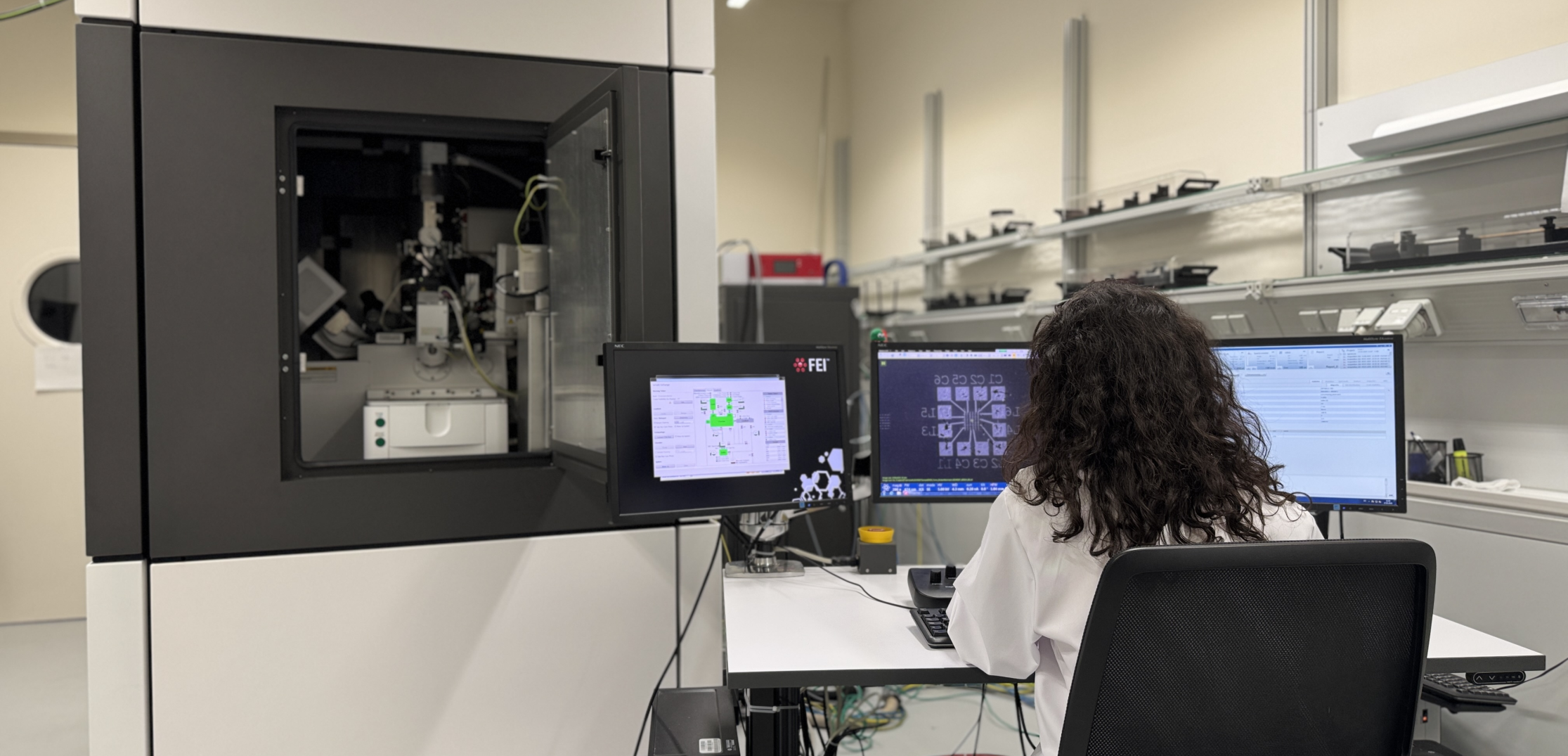
Wissenschaftlerin arbeitet an einem komplexen Analysegerät mit mehreren Monitoren im Labor.

Forschungsgebiete

  • 3D Printed Functional Organic and Inorganic Materials and Devices
    • Cluster 3DMM2O
    • In Situ Pyrolysis of 3D Printed Building Blocks of Functional Nanoscale Metamaterials
    • 3D Filament Evolution
  • Solarzellen
  • Brennstoffzellen (SOFC)
    • Superconducting Thin Films
    • Multiferroelectrica
    • Creep-induced microstructural evolution of the eutectic Mo-Si-Ti alloy
    • Characterization of Materials Compounds from Composite Materials
    • Segregation to creep-induced planar faults in Ni-base SX superalloys
    • Novel Materials: Metal-Organic Frameworks
    • Probing dynamics of noble metal nanoparticles under reaction conditions
    • A Nuisance for Every Microscopist: Carbon Contamination
    • Abgeschlossene Projekte
      • Oxygen separation membranes
      • Nanoparticles and clusters
      • Toxicological Effects of Nanoparticles on Cells
      • Diamond-like Carbon
      • TEM with physical phase plates
    • Publikationen

    Labor für Elektronenmikroskopie

    Karlsruher Institut für Technologie
    Labor für Elektronenmikroskopie
    Finanzmanagement
    Kaiserstraße 12
    76131 Karlsruhe

    Telefon: +49 721 608 - 4 3200
    Fax: + 49 721 608 - 4 3721

    Lieferadresse

    Karlsruher Institut für Technologie
    Labor für Elektronenmikroskopie
    Engesserstr. 7
    Geb. Raum 30.22 (Physik Flachbau)
    2. OG, Zimmer 228
    76131 Karlsruhe

    KIT-Seminar Elektronenmikroskopie

    finden Sie das Programm des KIT-Seminars Elektronenmikroskopie zum Download als pdf.

    • X Kanal (Twitter)
    letzte Änderung: 01.06.2026
    KIT – Die Universität in der Helmholtz-Gemeinschaft
    • Home
    • Impressum
    • Datenschutz
    • Barrierefreiheit
    • KIT